
Do Sharpies Wash Out of Clothes? What Parents Actually Need to Know
Short answer: whether Sharpie should stay on clothing depends on what happened. If the mark was accidental, treat it as a stain and keep it away from heat. If it was an intentional design, heat-setting can help it hold up better, but ordinary Sharpie ink may still fade with repeated washing. Fabric markers are made for textiles, although their setting instructions and wash durability vary by brand.
If this was a Sharpie accident, stop before using heat: Do not iron the garment, and do not put it in the dryer. Heat can set the stain. Follow the garment care label, test any stain treatment on a hidden area, and use Sharpie's permanent-marker stain guidance before machine drying. After washing, check the fabric while it is still air-dryable; repeat treatment or ask a professional cleaner before adding heat.
If you drew the mark on purpose and want to keep it, the setting and washing guidance below is for you.
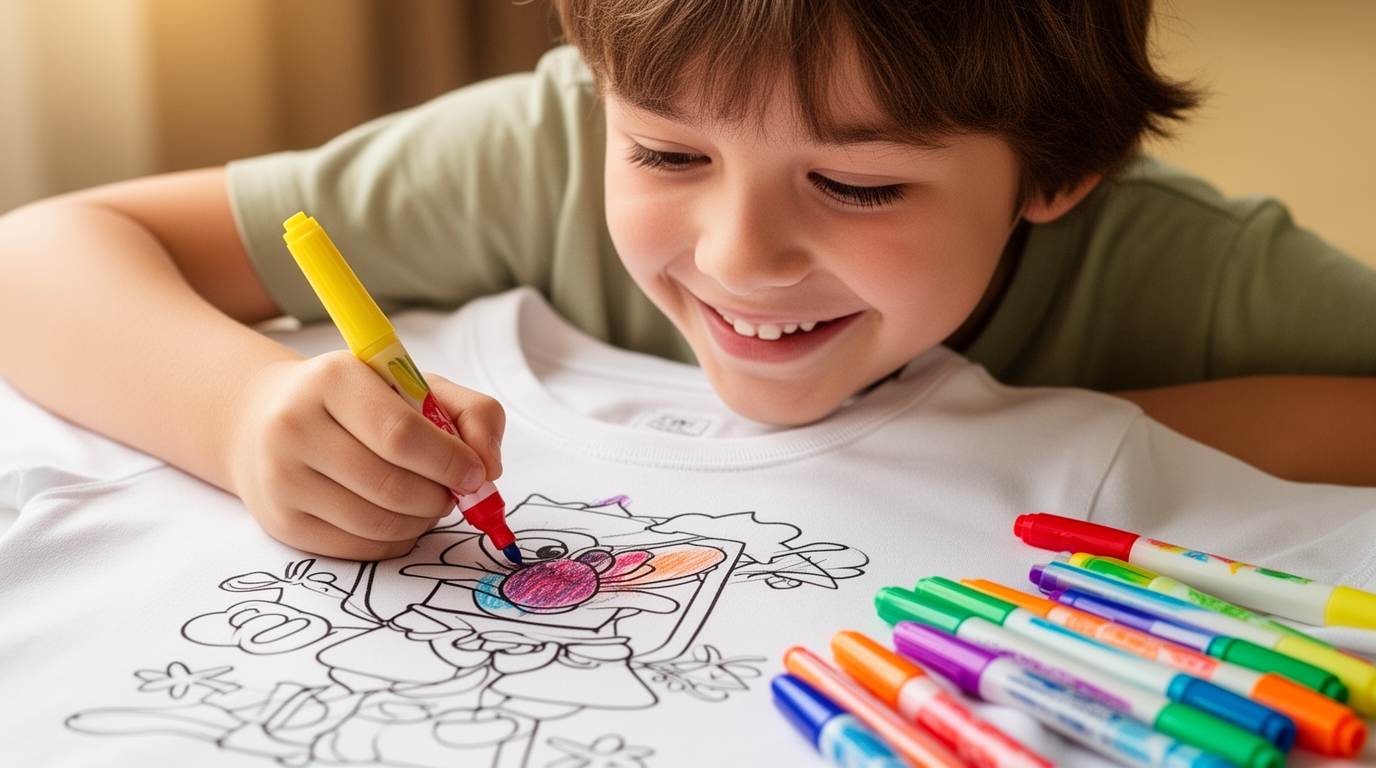
The "Washable" Confusion That Trips Up Parents
The word "washable" can describe two very different products, so read the full label rather than relying on that one word:
Washable art markers are formulated so their color can be removed from skin and most washable clothing more readily than permanent ink. That does not mean every stain disappears with a quick water rinse; some marks may need stain treatment and repeated washing.
Washable fabric markers are meant for designs that remain on fabric while the finished item is washed. Many require or strongly benefit from curing or heat-setting first. Instructions vary by product, so the marker package should decide the method and timing.
DaVinci in You fabric markers: Without heat, the color does not become permanently set right away. It can become more permanent if it is left to cure for long enough, but a later machine wash can still make the color fade heavily. For the strongest wash result, heat-set the finished design promptly. After prompt heat-setting, the item can be machine washed with extremely light fading—often little to no perceptible fading.
How to Set a Marker Design You Want to Keep
First, identify the marker and follow its package directions. A technique that works for one fabric-marker formula may not be the right timing or temperature for another.
Step 1: Let the design dry completely. Drying time depends on the ink, line thickness, and fabric. For example, Tulip recommends letting its fabric-marker designs dry flat for 24 hours for best results. Do not apply heat while the design is still wet.
Step 2: Heat-set only when you want the mark to remain.
- Use the hottest setting that is safe for the fabric and its care label.
- Protect the design and iron with a clean cotton pressing cloth.
- Use a dry iron without steam and follow the marker maker's time and motion instructions.
- For DaVinci in You markers, prompt heat-setting gives the best resistance to fading in a machine wash.
Dryer alternative: Use a dryer only when the marker directions and garment care label allow it. Drying times vary by marker brand; do not treat one brand's timing as a universal rule.
Step 3: Wash carefully.
- Turn the item inside out when practical.
- Use cold water, a gentle cycle, and mild detergent.
- Wash it separately the first time so you can check for any transfer or fading.
- Air dry or tumble dry on low when the care label allows it.
Preparation tip: If you are decorating a brand-new washable item, prewash it first unless its instructions say otherwise. Prewashing can remove sizing and other finishes that interfere with even ink coverage. Place a barrier between fabric layers to prevent bleed-through.
Fabric Markers vs. Sharpies: Which Is Better for a Fabric Project?
Both can leave lasting marks, but they are made for different jobs:
| Standard Sharpies | Fabric Markers | |
|---|---|---|
| Primary purpose | General-purpose permanent marking on many surfaces | Coloring and writing on textile fibers |
| Color on fabric | Can look less saturated and may fade with washing | Usually formulated for brighter, more even fabric color |
| Bleed-through | Possible, especially on thin fabric | Still possible; use a barrier between layers |
| Setting | Heat-setting can improve retention when the mark is intentional | Follow the exact brand directions; many require or benefit from curing or heat-setting |
| Wash durability | Varies by fabric, setting, wear, and washing method | Usually better suited to washing, but the result depends on the formula and whether directions were followed |
| Use with children | Check the exact product label and supervise the activity | Choose a product labeled for the child's age and intended use, and supervise the activity |
Bottom line: A standard Sharpie can work for an intentional fabric design, but a fabric marker is the more purpose-built choice. No marker category makes every result guaranteed: fabric type, drying or curing time, heat-setting, and laundering all affect the finish.
Brand directions are not interchangeable
- Crayola Fabric Markers: Crayola says an adult should heat-set the color before laundering or wearing the garment for added permanency; otherwise washing can reduce color intensity. See Crayola's current fabric-marker instructions.
- Tulip: Drying and heat-setting guidance varies across its marker products. Check the directions for the exact set rather than assuming every Tulip marker uses the same process.
- DaVinci in You: Heat-set promptly for the strongest machine-wash result. Air curing alone can make the color more permanent over time, but the first wash may still produce heavy fading.
Ready-to-color option: DaVinci in You blanket coloring kits include 10 fabric markers and a pre-printed blanket design. Heat-set the finished design before washing for the best color retention.
The Last-Day-of-School Teacher Dress Tradition
Teachers have shared end-of-year projects in which students decorate a plain dress or shirt. Some examples use fabric markers, some use Sharpies, and the finished wash durability depends on the specific marker and setting method. If the item will be worn and washed, choose markers whose label supports fabric use and follow those directions.
For a structured classroom or group gift that is designed for coloring, a blanket coloring kit with included fabric markers gives the group a printed design to fill in. An adult should heat-set the completed blanket before its first wash.
Frequently Asked Questions
What should I do if the Sharpie mark was accidental?
Keep the garment away from heat. Do not iron it or machine-dry it, because heat can set the stain. Follow the care label and Sharpie's stain guidance, test treatments on a hidden area, and inspect the garment after washing before deciding whether to repeat treatment or use a professional cleaner.
Can marker ink transfer to other clothes in the washing machine?
Heat-setting an intentional design and washing in cold water can reduce the risk, but it is not an absolute guarantee. Wash the item separately the first time and check for transfer or fading before combining it with other laundry.
Are fabric markers washable?
Fabric markers are intended to remain on fabric while the item is washed, but the required preparation varies. DaVinci in You fabric markers may fade heavily if machine-washed without heat-setting; after prompt heat-setting, fading should be extremely light and may not be perceptible.
How long does Sharpie last on a shirt?
There is no defensible universal wash count. Longevity depends on the fabric, how heavily the ink was applied, whether an intentional design was heat-set, how often the garment is worn, and how it is washed and dried. Expect gradual fading rather than a guaranteed number of washes.
What markers are appropriate for children to use on fabric?
Choose the exact product by its current non-toxic, age, and intended-use labeling rather than assuming every marker in a category is the same. Follow the package instructions, supervise the activity, protect the work surface, and place a barrier between fabric layers.