
Affiliate Marketing for Content Creators (2026 Guide)
Affiliate marketing for content creators means recommending a product or service with a tracked link or code and earning a commission when a qualifying purchase is attributed to you. The practical work is choosing offers that fit your audience, creating useful content, disclosing the relationship clearly, and maintaining links and terms over time.
Older content can continue sending qualified visitors to an offer, but affiliate income is not guaranteed or fully passive. Programs change, links expire, customers request refunds, and some commissions remain pending before payout.
A useful 2026 approach: Create content around a question people continue to ask, then review the offer, links, disclosure, and performance on a regular schedule. Searchable content can have a longer useful life, but no format or platform guarantees traffic or commission.

Quick Map: A Maintainable Affiliate System
Use this as a planning checklist. Each step should make the recommendation easier to understand, measure, and keep current.
| Step | What you do | Maintenance benefit | Audience-fit question |
|---|---|---|---|
| 1 | Choose a small set of offers | Fewer terms and links to monitor | Does this solve a problem my audience already has? |
| 2 | Choose one or two durable formats | Easier to update than scattered mentions | Which format helps this audience make a decision? |
| 3 | Keep a link and terms inventory | Broken or inactive offers are easier to replace | Is the destination still relevant and accurate? |
| 4 | Add one useful next step | Readers can continue their task without hunting | What would help after this recommendation? |
| 5 | Review the content on a set schedule | Disclosures, facts, links, and terms stay current | Have reader questions or objections changed? |
1) Understand How the Affiliate Offer Pays
Affiliate programs do not all pay the same way. Read the current offer rather than inferring terms from the product type.
| Commission structure | How it can work | What to verify |
|---|---|---|
| One-time commission | One qualifying sale produces one commission | Rate, attribution window, eligible products, cancellations, and refunds |
| Higher-value one-time commission | A larger purchase may produce a larger commission | Qualification rules, refund period, claim restrictions, and payout timing |
| Recurring commission | Some programs pay again while the referred customer remains eligible | Whether payments are truly recurring, for how long, and what ends eligibility |
Recurring payments remain variable. Customers can cancel, programs can change their terms, and the merchant may limit how long a referral earns commission.
For a current platform example, Shopify Collabs explains that each active partnership displays its own commission amount. It also says a merchant can set a holding period, a canceled or fully refunded order can cancel pending commission, and payout rules apply before funds are released.
2) Choose Offers That Fit Your Audience
A large percentage does not make an offer useful. Start with the problem your audience is trying to solve, then examine the product and program terms.
Offer scorecard
| Criterion | What to look for | Questions to ask |
|---|---|---|
| Audience need | A real problem or purchase decision that appears in audience questions | Can I explain who should and should not buy this? |
| Product evidence | Accurate specifications, terms, and your real experience when claiming it | Can I support every material claim I plan to make? |
| Attribution | A clearly described link, code, or other tracking method | What actions qualify and how long does attribution last? |
| Payment terms | Clear holding, refund, dispute, threshold, tax, and payout rules | When can a pending commission change or be canceled? |
Compare realized results after you have enough data: attributed visits, qualifying sales, commission earned, cancellations, refunds, and the time required to keep the content accurate. A headline commission rate alone cannot tell you which offer will perform better.
3) Use Durable Content Formats
Durable content answers a question that can remain useful after publication. It may continue attracting readers, but discovery and sales vary by platform, topic, competition, and audience behavior.
| Format | Possible channels | Reader job | Specificity to add |
|---|---|---|---|
| “Best X for Y” guide | Blog, long-form video, or visual discovery platform | Narrow a set of options | Define who “Y” is and the comparison method |
| Tutorial | Video, blog, email, or short-form series | Complete a task | Show conditions, limitations, and mistakes to avoid |
| Comparison | Blog or long-form video | Choose between alternatives | State criteria, date, evidence, and tradeoffs |
| Template or checklist | Blog, email, or downloadable resource | Apply a repeatable process | Tailor it to a real niche or constraint |
Choose channels based on where your audience looks for help and what you can maintain. There is no universal “best” affiliate platform. Your own reach, clicks, conversions, and maintenance cost are more useful than a broad platform ranking.
Repurposing tip: If a tutorial is useful in more than one format, adapt it into a short clip, pin, or email that points readers to the complete resource. Do not force a fixed number of derivative posts.
4) Make Recommendations Specific Without Overpromising
Specific recommendations help people understand whether a product fits their situation.
- Too broad: “This is the best microphone.”
- More useful: “This microphone may suit a small room if you want a simple setup; here are the noise, connection, and budget tradeoffs I found.”
Three useful layers of specificity
- Audience: Who is the recommendation for?
- Moment: What are they trying to do now?
- Constraint: What budget, time, skill, accessibility, or ethical concern affects the choice?
This framing may help readers make a better-informed decision. Do not claim a causal lift in sales or a lower return rate unless you have applicable data that supports those outcomes.
5) Build a Link System You Can Maintain
Broken, expired, or inaccurate links frustrate readers and can prevent attribution. Keep a simple inventory of each offer, destination, disclosure, and review date.
- One source of truth: Record the active destination and terms for every offer.
- Direct contextual links: Link where the recommendation is explained, not only from a generic hub.
- A replacement plan: Remove or revise an offer when the destination, product, or terms change.
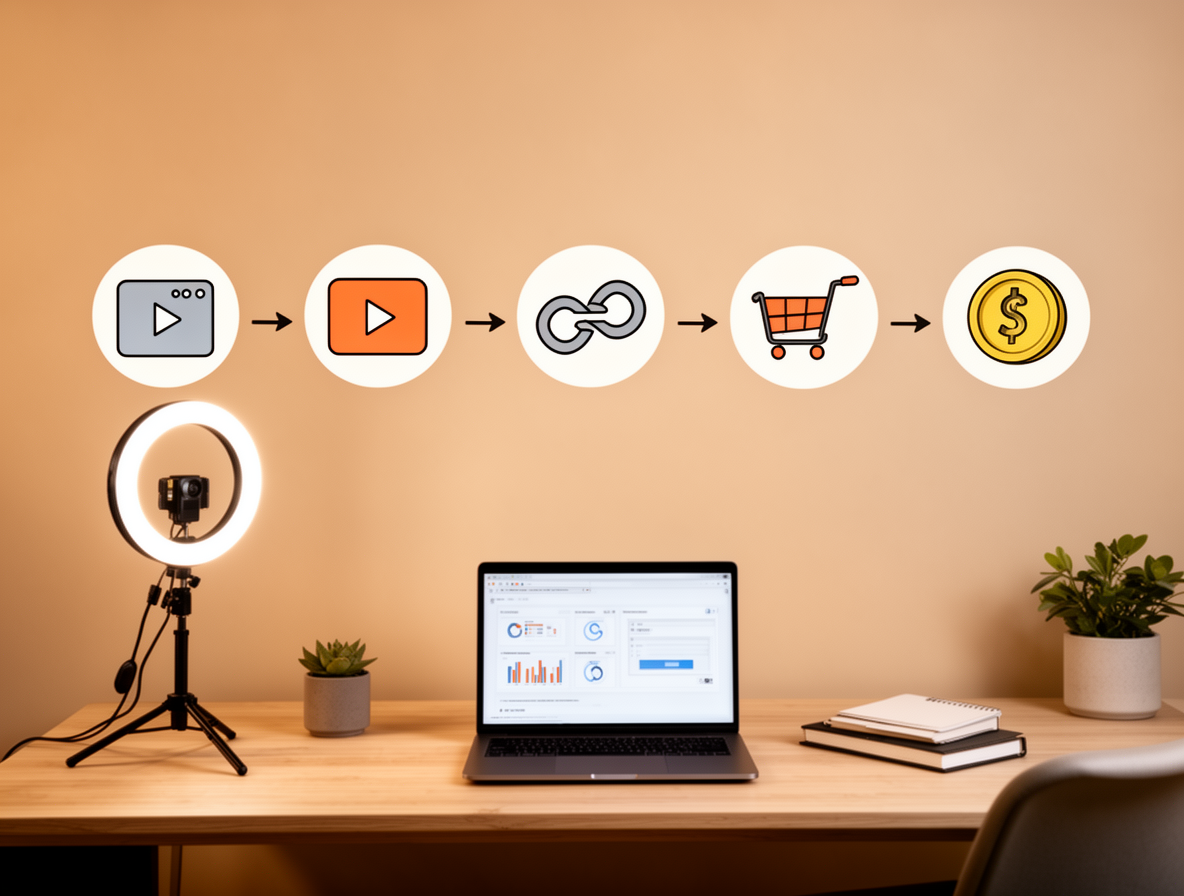
Minimal link architecture
| Asset | Purpose | What to include |
|---|---|---|
| Offer inventory | Internal source of truth | Program, destination, terms, disclosure, owner, and review date |
| Resource page | Explain recommendations in context | Who each option suits, tradeoffs, disclosures, and update date |
| Email or follow-up resource | Help readers continue a task | Relevant guidance, a clear disclosure, and only the links needed |
6) A Current Creator Offer From DaVinci in You
If you create family, craft, teacher, or activity content, DaVinci in You has a current creator application page. The public page describes applications through Shopify Collabs, affiliate commission, and free kit seeding when applicable.
Review the approved offer for the current commission, eligibility, attribution, seeding, shipping, deliverables, holding period, and payout terms. Do not assume that applying guarantees approval, product, commission, or earnings.
Shopify currently says general new Collabs creator signup is paused. New creators can still create an account through a direct brand invitation or after applying through a participating merchant’s application page. Existing creators can continue using their Collabs accounts. See Shopify’s current creator setup guidance.
Disclosure: This section describes DaVinci in You’s own creator program.
7) Affiliate Application and Pitch Checklist
- The product fits a real audience need.
- The current commission and attribution terms are clear.
- Refund, cancellation, dispute, holding, threshold, and payout rules are clear.
- The program permits your planned placements and promotion methods.
- You can describe your real experience honestly, including limitations.
- You understand any content, exclusivity, licensing, or approval requirements.
- You have at least one useful content idea that does not depend on hype.
Brand pitch template
Subject: Affiliate content idea for [audience]
Hi [Name],
I create [content type] for [audience]. They regularly ask about [problem], and I am considering [product] as one possible solution.
My content idea is [specific tutorial, comparison, or demonstration]. Here are two relevant examples of my work: [links].
If you have a current affiliate or creator offer, where can I review the commission, attribution, permitted promotion, and payout terms?
Thanks,
[Name]
8) FTC Affiliate Disclosure Guidance
If you earn commission or receive another benefit for an endorsement, make that material connection clear and conspicuous. The FTC says the disclosure should be hard to miss and placed with the endorsement message itself.
| Format | Clear wording example | Placement guidance |
|---|---|---|
| Video | “I may earn a commission from the affiliate links in this video.” | Disclose in the video, not only in its description; also disclose near affiliate links in the description |
| Short video or Reel | “Affiliate link — I may earn a commission.” | Put the disclosure in the content where viewers can notice it; audio and visual disclosure can improve noticeability |
| Blog | “This post contains affiliate links. I may earn a commission from qualifying purchases.” | Keep it close to the endorsement and difficult to miss, not only in a footer or profile page |
| Email or social post | “Affiliate link — I may earn a commission.” | Place it with the recommendation and link, before text hidden behind “more” |
| Live stream | “I may earn commission from links shared during this stream.” | Repeat periodically because viewers may join after the first disclosure |
Do not rely on vague shorthand. FTC guidance warns that terms such as “#sp” or “collab” may not explain the relationship. A platform disclosure tool can be used in addition to your own clear disclosure, but do not assume the tool is sufficient by itself.
The FTC’s Endorsement Guides Q&A also says an affiliate relationship should be disclosed in the video and in the description near the links when both are used.
9) Metrics to Review
- Attributed visits: How many visits the program recorded from your link or code.
- Qualifying sales: Purchases that met the current offer terms.
- Conversion rate: The share of attributed visits that became qualifying sales, when the platform provides it.
- Earnings per click: Commission divided by attributed clicks for the same period and offer.
- Cancellations and refunds: Orders or commissions that were reversed.
- Maintenance cost: Time spent updating facts, links, disclosures, and content.
Use comparable periods and the same program definition when reviewing performance. A small sample can move sharply, so avoid treating one post or one week as a stable forecast.
10) A 30-Day Test Plan
Week 1: Choose and verify
- Choose one relevant offer.
- Read its commission, attribution, promotion, refund, holding, and payout terms.
- Write down the audience question the content will answer.
Week 2: Publish one useful resource
- Create a tutorial, comparison, or demonstration.
- Add a clear disclosure with the endorsement.
- Link to the current offer with accurate anchor text.
Week 3: Distribute selectively
- Adapt the resource to one or two channels your audience uses.
- Keep the disclosure clear in every endorsement.
- Answer questions without adding unsupported product claims.
Week 4: Review and decide
- Check links and offer terms again.
- Review visits, qualifying sales, reversals, and time spent.
- Continue, revise, or stop based on the evidence you actually have.
Frequently Asked Questions
How many followers do you need for affiliate marketing as a content creator?
There is no universal follower minimum. Eligibility depends on the program, and a smaller relevant audience does not guarantee sales. Check the current terms and use your own audience and performance data.
Can affiliate marketing be passive for content creators?
Not completely. Existing content can continue referring qualifying purchases, but links, disclosures, product facts, and program terms require maintenance, and commissions can change or be canceled.
What is the best platform for affiliate marketing in 2026?
There is no universal best platform. Choose based on where your audience looks for help, which formats you can maintain, the program’s promotion rules, and your own attributed traffic and sales data.
Do you need a website to do affiliate marketing?
Not always. Some programs permit affiliate links in approved social or video placements, while others have different eligibility rules. A website can help organize durable resources, but the current program terms control what is allowed.
Where should you put FTC disclosures?
Put the disclosure with the endorsement where it is clear and hard to miss. For video endorsements, disclose in the video, not only in the description; when affiliate links appear in the description, disclose near those links too.
Interested in DaVinci in You’s current creator offer? Review the terms and apply through the DaVinci in You creator page.